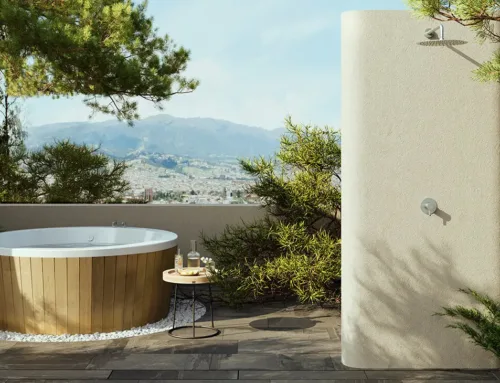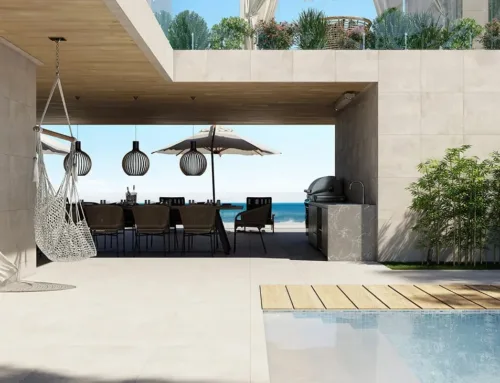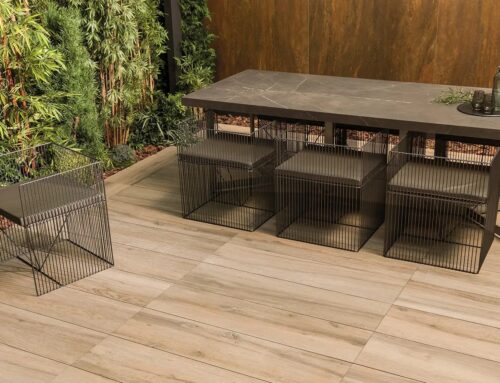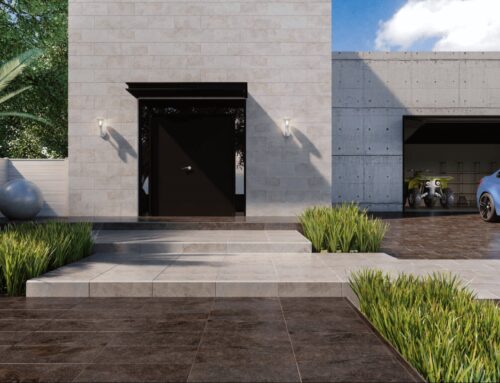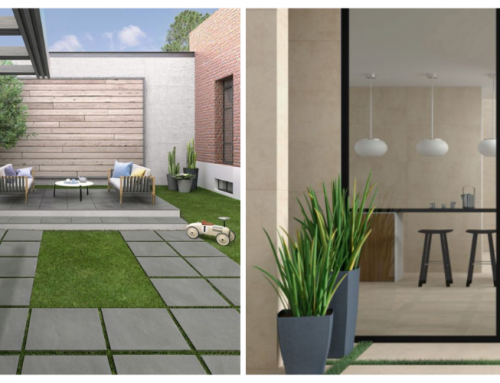

Wall tiles and outdoor ceramics help us to define the spaces where we spend the most time in summer. Areas of our home in which to eat and share unforgettable moments.
The basis of these shelters, both literally and metaphorically, is provided by outdoor flooring and tiles. In the following article we will compile the essential tips with which to create an outdoor area and we will review some ideas and tips for the maintenance of the floors intended for these functions.
With the good weather, terraces, swimming pools, porches, gardens and even balconies become true outdoor spaces where life flows. The latest technologies applied to the manufacture of materials for the home have reduced the differences in comfort between indoor and outdoor products to a minimum. Waterproof fabrics and designer furnishings, together with thoughtful outdoor lighting, turn these areas into true outdoor living spaces that can be enjoyed at any time of the day.
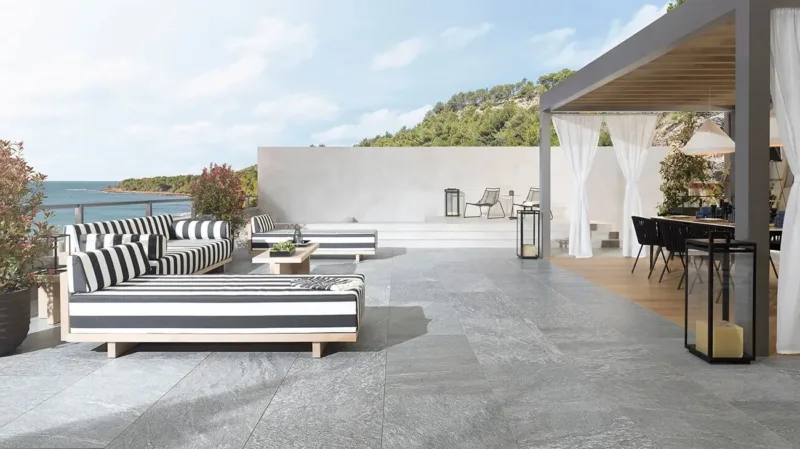
River Silver 59,6 cm x 120 cm and PAR-KER® Delaware Natural 19,3 cm x 180 cm by Porcelanosa
Flooring for terraces: how to choose the best material
One of the key points when designing outdoor spaces is to choose a durable floor. The terrace is often an extension of the living room or kitchen. In many projects, the same indoor flooring is extended to the outside. In this way, a sense of continuity is achieved. Another option is to mark the change of atmosphere with a different exterior paving that contrasts and adds personality.
Whatever the style, outdoor tiles must withstand the most demanding conditions. It is therefore important to choose materials that meet these requirements:
- Low water absorption. They must withstand rain and humidity without deteriorating.
- Frost resistance. When water freezes, it expands. If the material is porous, cracks and breaks appear. That is why porcelain tile is the best choice in cold climates.
- Non-slip properties. Outdoor tiles for terraces and, above all, around swimming pools must have a high anti-slip rating. The R-rating (ramp test) measures slip resistance. An R11 or R12 rating is preferable for this type of situation.
- Resistance to heavy loads. Outdoor paving must withstand heavy loads without damage such as garden equipment, furniture, barbecues or planters. For this reason, outdoor tiles usually have a minimum thickness of 20 mm.
- Versatile laying systems. Nowadays, there are different solutions for installing outdoor tiles: from traditional sand and mortar bases to raised technical floors with adjustable supports such as those developed by Butech, which allow concealing installations and improving drainage.
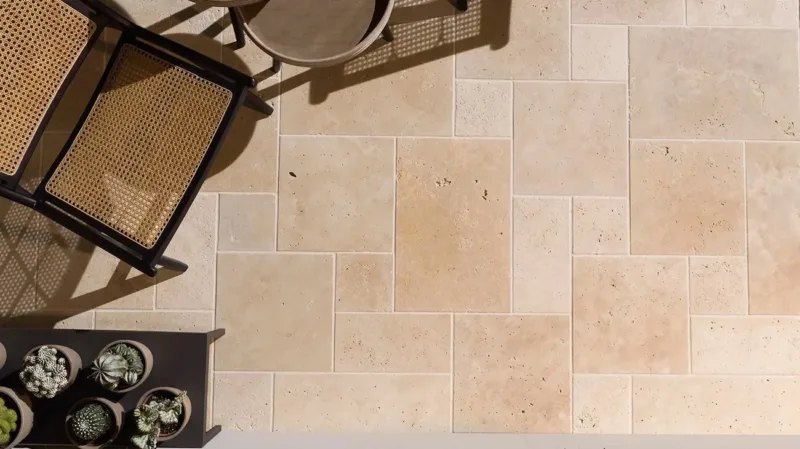
L’Antic Colonial’s Travertino Multiformat Toscano Anticato
The best materials for outdoor tiles
The secret to creating a comfortable terrace where you feel like spending time is the choice of flooring. Outdoor tiles and other materials must resist the weather and remain unalterable over the years. That’s why the following options are particularly suitable, both for their beauty and their performance:
- #01 Porcelain tile is the most practical and resistant option. Its low porosity prevents rainwater from penetrating its surface, thus avoiding the freeze-thaw cycle. It also offers greater resistance to temperature variations throughout the year thanks to its density.
- #02 Ceramic, on the other hand, is more porous than porcelain tile. However, it can be used in more protected outdoor Its main advantage is its versatility. Nowadays, there is a wide range of designs that allow maximum customization of outdoor spaces. In addition, it is more comfortable when in contact with the feet as it dissipates heat more quickly.
- #03 The use of stone in exteriors brings a noble and timeless Granite, slate, limestone or marble are some of the most common options. It is a material that acquires a special charm over time. As it is a completely natural product, it requires more specific maintenance in exchange for a unique aesthetic.
Ideas for gardens and patios with outdoor ceramics
Nowadays, there is no difference in design between indoor and outdoor spaces. Outdoor tiles allow the same creativity and detail to be applied in both areas. Here are some ideas for renovating your garden or outdoor dining room that will enhance your home and help you enjoy the pleasure of outdoor living.
#01 Garden terraces and slopes
In sloping gardens and patios, retaining walls and steps allow you to make the most of every corner. We should select non-slip exterior paving, with a textured finish for greater safety. By covering the walls with the same finish, we will achieve a uniform design. Finally, with planters and recessed lights, we will have a decorative and elegant touch.
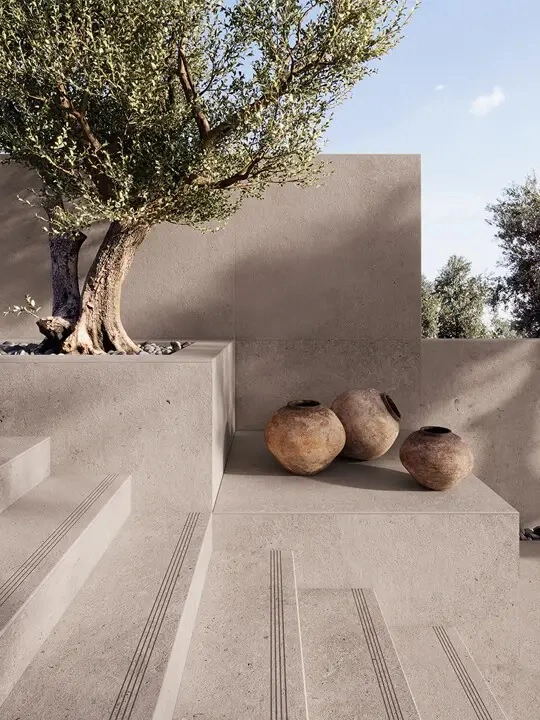
Berna Topo by Porcelanosa
#02 Patios and poolside terraces
Installing a large-format porcelain tile in the pool area will add a touch of exclusivity. In the same way, by covering the edges, the interior and the steps with the same model, we will generate a continuous, minimalist and sophisticated surface effect. In addition, it is essential that these pieces have a non-slip finish and comply with current safety regulations.
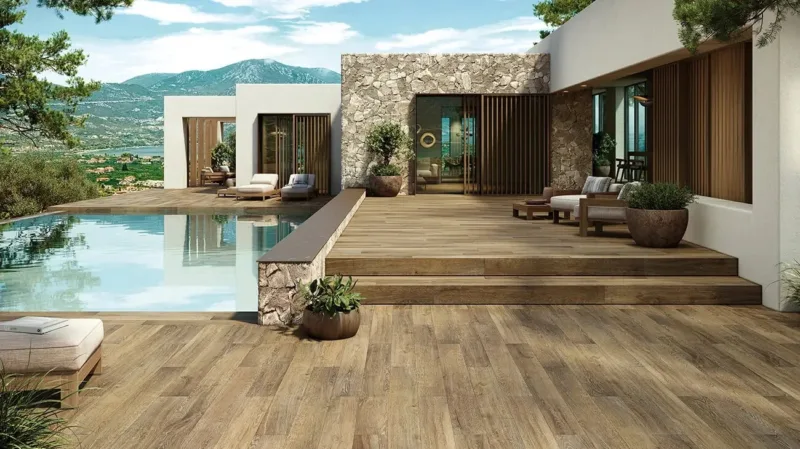
PAR-KER® Brussels Oak by Porcelanosa
#03 Flooring for outdoor terraces and patios
The quality and versatility of porcelain tiles allows the same floor to be extended from indoors to outdoors. A wide range of possibilities ranging from natural stone to more contemporary cement style designs. By combining two or more shades we can create borders or differentiated areas within the patio or terrace. The result: a well-defined space with a touch of design.
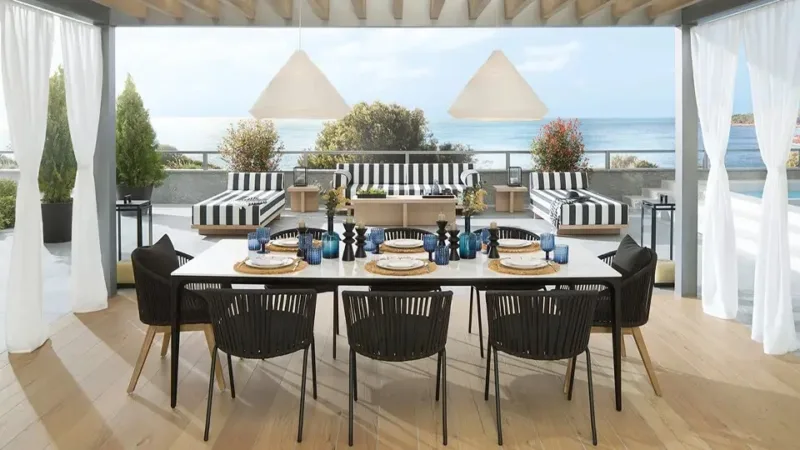
PAR-KER® Delaware Natural and River Silver by Porcelanosa
#04 Inspired by wood
Wood is one of the most commonly used materials on terraces and porches. In this sense, PORCELANOSA Grupo has a wide catalogue of outdoor ceramics and large format porcelain tiles which recreate its texture and warmth. These floors can be laid in longitudinal slats or creating a parquet effect to give personality to the outdoor flooring and require very little maintenance.
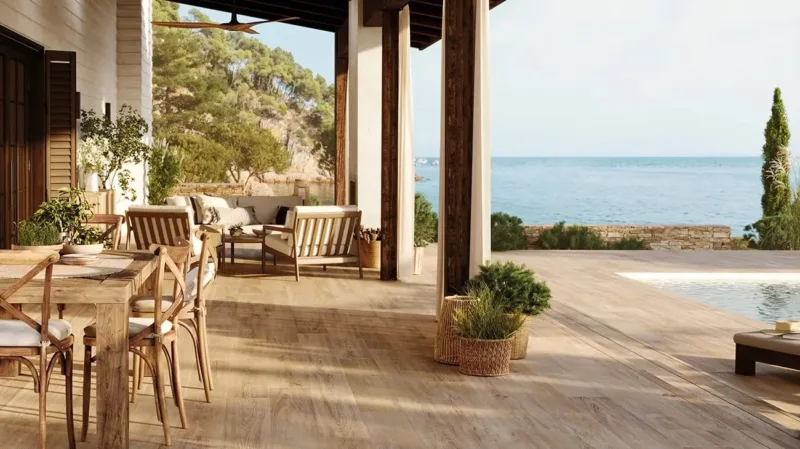
PAR-KER® Tanzania Almond by Porcelanosa
#05 Ideas for outdoor wall cladding
Outdoor tiles are also an excellent choice for decorating vertical surfaces. Whether it’s the strength of porcelain, the protection of ceramic or the beauty of stones and other materials such as Krion®, the finishes add the finishing touch to any outdoor area.
Embossed or patterned models will reinforce the connection between indoors and outdoors, while textured pieces that play with light will add volume. In addition, they can be placed directly on the walls or function as ventilated facades, generating an air chamber that improves energy efficiency and thermal insulation.
More design tips and inspiration
Choosing the right exterior tiles can completely change the look of a home. A hard-wearing, well-installed floor adds aesthetic and functional value. In addition, ceramic outdoor flooring offers sustainable and long-lasting solutions.
Before you decide, explore our outdoor style guides and tips for more inspiration and suggestions on how to renovate these spaces. You can also visit our showroom where you will discover the most suitable collection to renovate your terrace, garden or porch.